Let's be honest. As a retail store owner or manager, you've likely experienced that moment. A customer approaches the counter with an item, and the price that comes up at the register is different from the one they saw on the shelf. Maybe it's a sale that ended yesterday, a promotion that hasn't been updated everywhere, or perhaps the printed label simply got swapped with a neighbor. This moment is more than just a minor annoyance; it's a direct hit to your credibility. You're forced to either honor the lower, likely incorrect, price and take a loss, or enter into an uncomfortable conversation that can cost you a customer for good. At the heart of this all-too-common problem is a simple truth: traditional paper labels are a fragile link in your pricing chain, entirely dependent on human hands and human attention. The good news is, there is a way to fundamentally change this. The solution lies in a shift to electronic price tags.
To understand how electronic price tagssolve this, we need to look at where errors creep in. Imagine a typical price change, perhaps for a weekend sale. Your head office sends the new pricing list. A staff member prints hundreds, maybe thousands, of new labels. Then begins the laborious, tedious, and critically, error-prone process of manual replacement. Someone has to walk every aisle, find every product, remove the old label, and place the new one. It's a task often done under time pressure, during off-hours, or while juggling other customer service duties. In this environment, mistakes are not a possibility; they're a statistical certainty. A label can be placed on the wrong shelf. A decimal point can be misread from the list. A batch of labels can be forgotten in the back room. Once that wrong piece of paper is on the shelf, it becomes the “truth” for your customer until someone catches it, which might be at the point of a frustrating checkout.
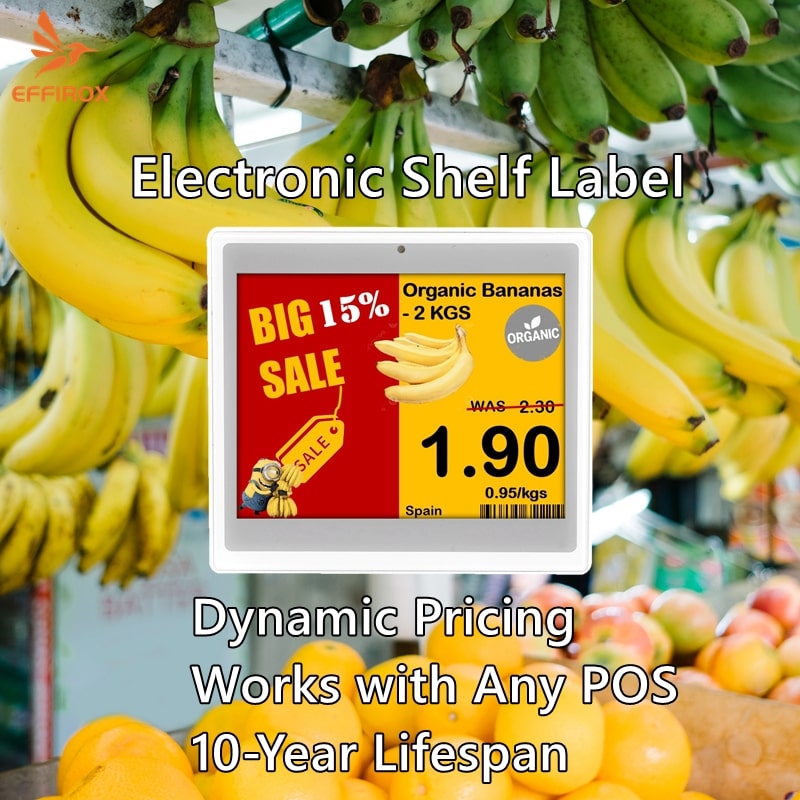
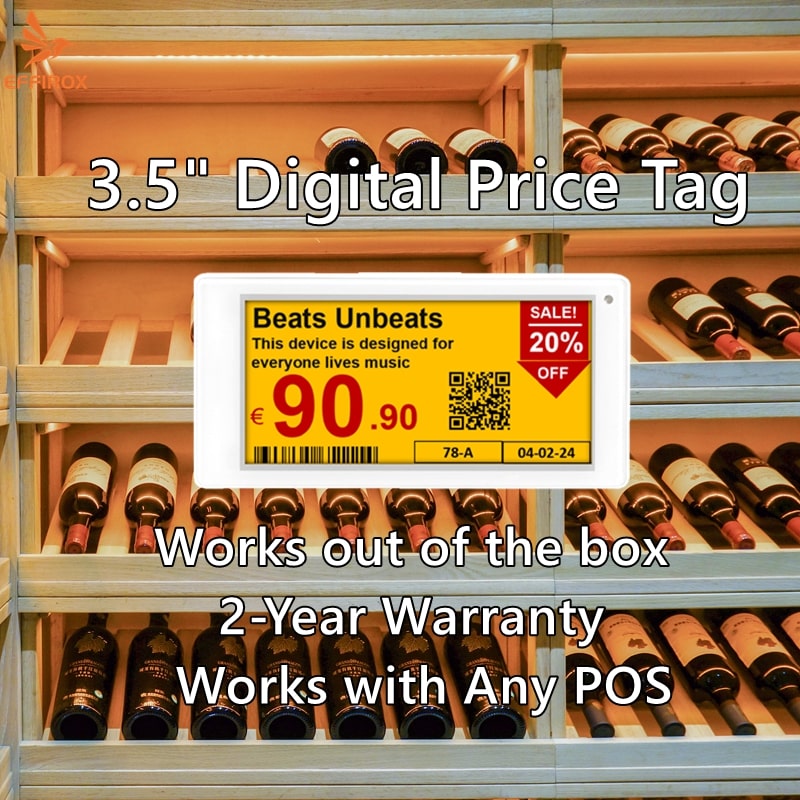
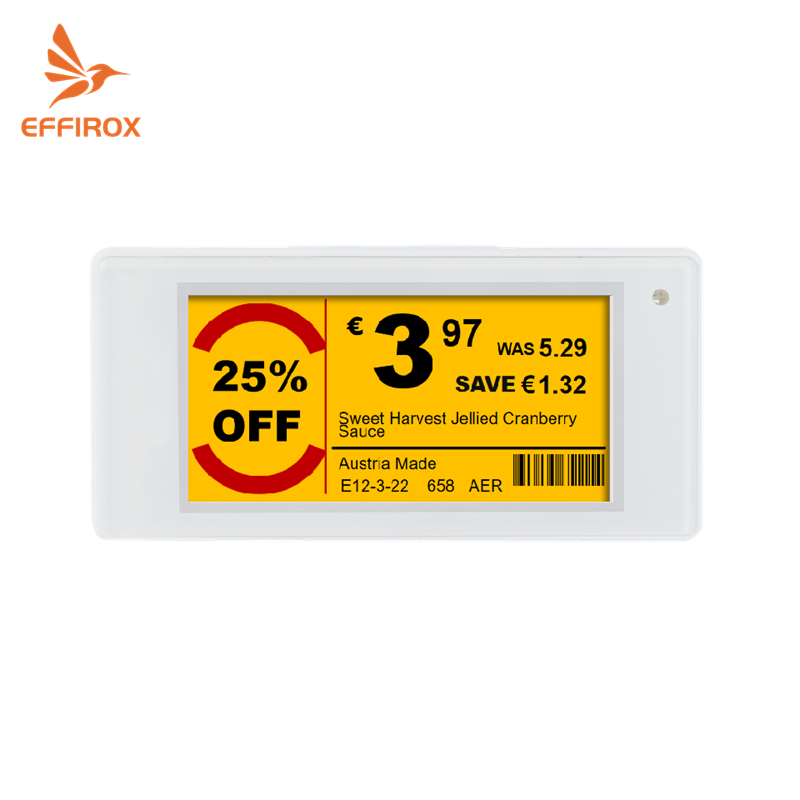
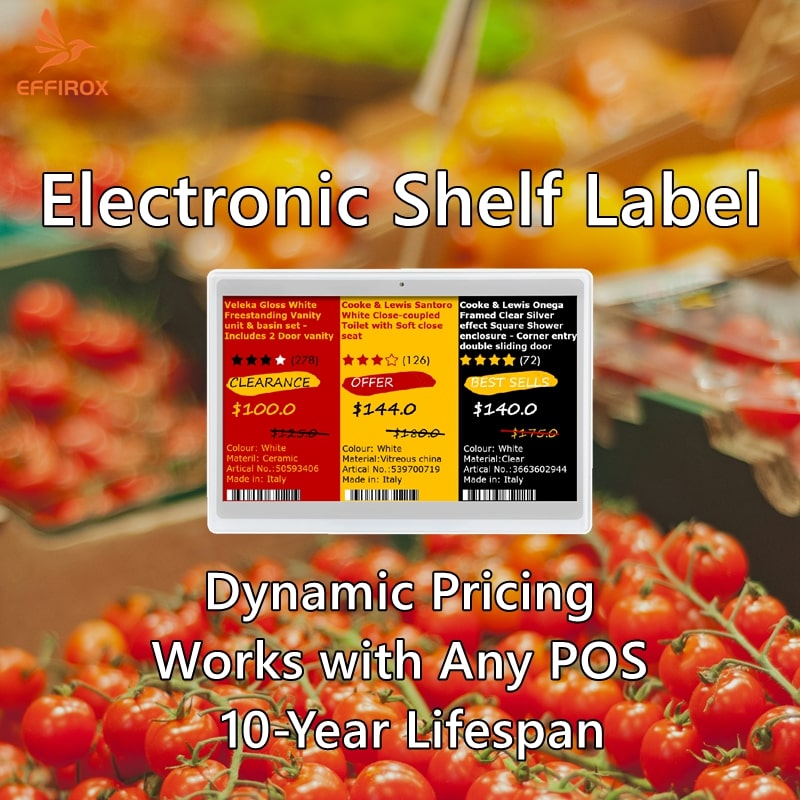
This is where the silent efficiency of electronic price tags comes into play. Think of them not just as screens, but as individual, connected endpoints in your store's network. Each tag receives its pricing information wirelessly from a central system, the same system that updates your Point of Sale (POS). The process is no longer physical, but digital. When you update a price in your central software—whether it's for one item, a category, or a store-wide promotion—you can send that update to the corresponding electronic price tags with a few clicks. Within minutes, or even seconds, every single relevant display on your sales floor reflects the exact, correct price. The “walk of shame” with a stack of paper is eliminated. The chance for a physical misplacement is gone. The price on the shelf is now a direct, real-time echo of the price in your database.
The impact on pricing accuracy is transformative. Suddenly, consistency is guaranteed. The price you advertise, the price on the shelf, and the price at the register are in perfect, unwavering harmony. This eradicates the root cause of those painful checkout disagreements. Your customers develop a deep, unspoken trust in your store's pricing integrity. They know that what they see is what they will pay. This trust is a powerful, yet often overlooked, component of customer loyalty. Furthermore, the speed of updates allows for pricing agility that was previously unthinkable. You can respond to competitor pricing, manage time-sensitive flash sales, or adjust prices for perishable goods dynamically, all with the confidence that your entire store is perfectly synchronized. There is no lag, no outdated information, and no “oops” zones.
But the benefits of electronic price tags extend beyond just correcting prices; they proactively eliminate the very conditions that create manual errors. The manual process is inherently vulnerable. It relies on perfect communication, perfect execution, and perfect attention to detail from multiple people across time. By digitizing the flow of price information, you remove the human element from the transmissionand displayof that data. Your staff’s valuable time and cognitive energy are freed from the robotic task of label swapping. They are no longer “data placers” but can be redeployed as true customer service ambassadors—stocking shelves more efficiently, assisting shoppers, and providing the human touch that builds a great retail experience. The system manages the precision; your team focuses on the people.
In the end, investing in electronic price tags is an investment in peace of mind and operational truth. It's about moving from a reactive state—where you're constantly checking for errors, apologizing for mistakes, and losing money and face—to a proactive, controlled state. It ensures that your pricing strategy, a core element of your retail business, is executed flawlessly on the front lines where it meets the customer. The question shifts from “Can we get all the labels changed in time without making a mistake?” to a simple, confident certainty. With accurate, reliable, and instantly updateable prices across your entire store, you build a foundation of trust with your customers and free your team to do what truly adds value. That's the real power of making the switch.


 Online Service
 sales@effirox.com
 WhatsApp:8617701969397