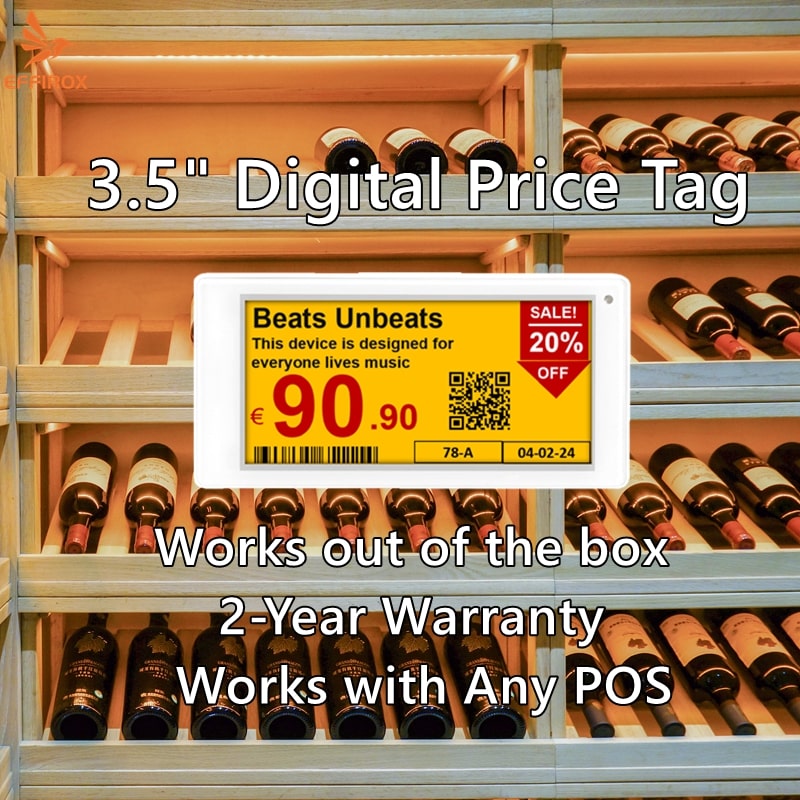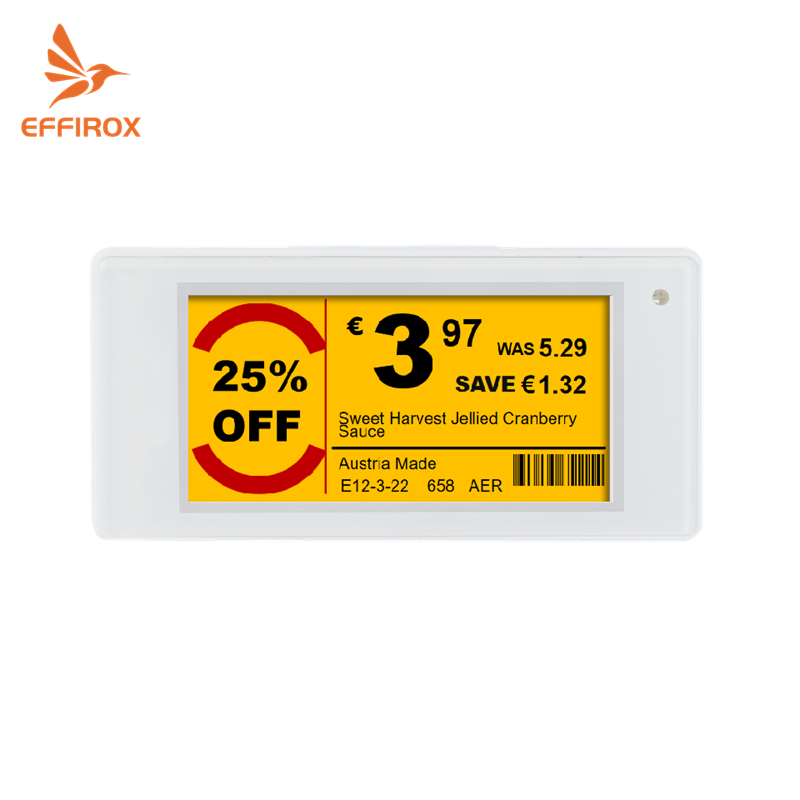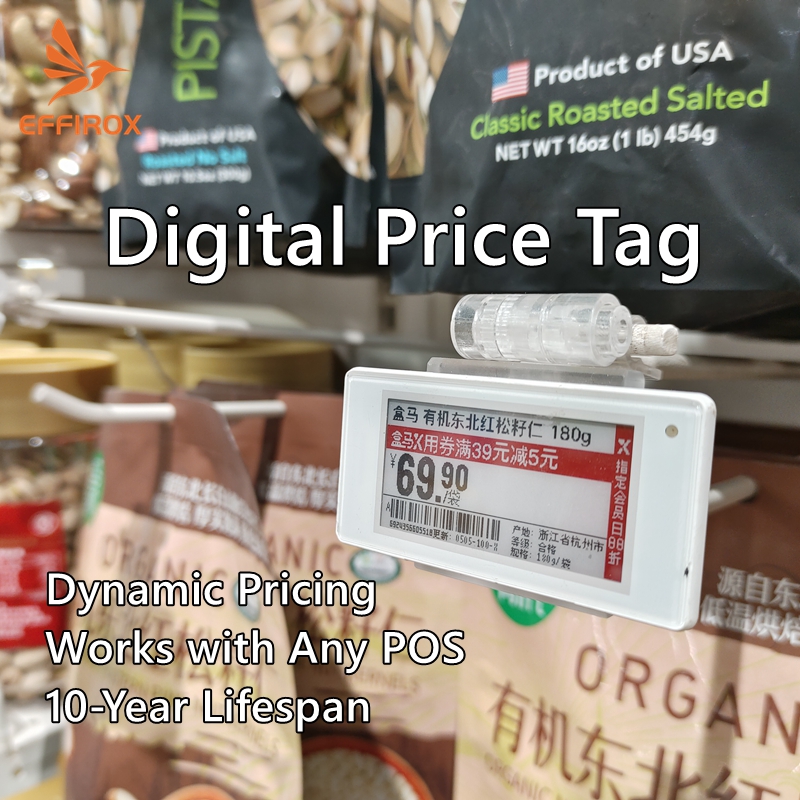
In the day-to-day hustle of running a retail business—managing inventory, leading your team, and serving customers—pricing regulations can sometimes feel like a distant concern, right up until the moment they're not. A surprise inspection, a customer complaint to a trading standards body, or a notice about a pricing error can quickly turn a routine day into a costly and stressful situation. Fines, mandatory refunds, and the resulting damage to your store's reputation are real consequences of non-compliance. For many independent retailers and chain store managers, maintaining 100% pricing accuracy across hundreds or thousands of items, especially during frequent promotions, is one of the most daunting operational challenges. The traditional method of paper labels, reliant on human hands and perfect execution, is inherently fragile. This is where a modern solution steps in, not just as a tool for efficiency, but as a foundational system for compliance and peace of mind. I'm talking about a comprehensive shift to electronic price tags.

To appreciate how electronic price tags become a compliance safeguard, we must first understand the nature of the regulatory risk. Pricing regulations, which can vary by country, state, and even municipality, generally revolve around a core, non-negotiable principle: price transparency and accuracy. The price advertised on the shelf must be the price charged at the checkout. It sounds simple, but in practice, it's a constant battle. A promotion ends on Saturday night, but a handful of paper labels are missed during the Sunday morning changeover. A supplier increases a wholesale cost, requiring a price adjustment on Monday, but the busy store team doesn't complete the re-labeling until Wednesday. In each of these tiny gaps, your store is technically in breach. You are advertising one price and charging another. The vulnerability isn't due to negligence, but to the physical and manual limitations of the paper system itself. Every label change is an opportunity for a human error—a misread sheet, a missed aisle, a label placed on the wrong hook.
This is where the operational logic of electronic price tags directly intersects with regulatory compliance. Think of these digital displays as the perfect, tireless members of your team dedicated solely to pricing integrity. They are connected endpoints in a digital network. When a price change is authorized in your central system—be it your point-of-sale (POS) or a dedicated pricing management platform—that change is communicated instantly and wirelessly to the corresponding electronic price tags on the shop floor. The update is not a task on a to-do list; it is a synchronized digital event. If a promotional price is scheduled to end at 11:59 PM, the system can be programmed to revert all relevant tags to the standard price at precisely that moment. There is no delay, no forgotten sections, and no physical labels left behind to mislead customers the next morning. The moment a price is legally required to be correct in your system, it is correct on the shelf. This closed-loop automation eliminates the time lag that is the primary cause of accidental non-compliance.
But the power of electronic price tags for compliance goes beyond just timely updates; it's about creating an accurate, verifiable, and permanent record. In the event of a query or inspection, you are no longer reliant on memory or paper checklists. Your digital system provides a clear, time-stamped audit trail. You can demonstrate exactly when a price was changed, who authorized it, and prove that the update was deployed store-wide at a specific time. This level of transparency is incredibly powerful. It shifts the narrative from a defensive “we must have missed a few labels” to a confident “here is our system’s log showing the update was completed comprehensively at 12:01 AM.” This audit capability extends to complex regulations like unit pricing, which requires displaying a cost per unit of measure (e.g., per liter or per kilogram). Manually calculating and printing these for thousands of items is prone to error. With electronic price tags, the unit price can be calculated automatically by the system based on the item's retail price and weight/volume data, ensuring mathematical accuracy and consistent display format on every single tag, every single time.
Furthermore, consistency across channels is becoming an implicit part of modern pricing fairness. If you advertise a “store-only” promotion online or in a flyer, regulators and customers expect that price to be honored in-store. With a disjointed paper system, a store manager might forget to put up the promotional labels for an online-only deal that customers are asking about in-store. With a networked system of electronic price tags, that promotional price can be pushed to specific store locations or even all stores seamlessly, ensuring your physical shelves always match your digital promises. This holistic consistency is the hallmark of a compliant, trustworthy operation. It removes the guesswork and frantic scrambling, replacing it with a calm, system-driven certainty.
Ultimately, integrating electronic price tags is a proactive investment in operational integrity. It moves pricing compliance from being a reactive, fear-based concern—something you worry about and manually check for—to being an embedded, automated function of your store’s infrastructure. The system itself enforces the rules. It allows you, the business owner or manager, to shift your focus and your team's energy from the endless, risky cycle of manual price checking to higher-value activities that truly grow your business and serve your customers. In a landscape where consumer trust is paramount and regulatory scrutiny is a constant, electronic price tags provide more than just an upgrade to your shelves; they provide a verifiable, reliable, and silent guardian for your store's compliance and good standing.


 Online Service
 sales@effirox.com
 WhatsApp:8617701969397